

“Is knowledge possible without language?”
We kicked off our Reader’s Theater read-aloud of The Miracle Worker with this question. Students emphatically decided that the answer is “yes” and pointed to all kinds of non-propositional knowledge one might have, like how to ride a bike, play a sport, or knit a scarf. Students all agreed that in these cases language to describe what you were doing was not necessary to qualify as knowing, but disagreed about other cases, like whether you could truly know what you were feeling if you didn’t have the words to describe your emotions. Some students pointed out that without words to describe your feelings, it may be hard to remember them- others argued that knowing does not involve remembering, but rather just feeling in the moment. Students brought up a number of cases to test our intuitions- Does a baby know when it’s sad? Does an animal? Does a plant know it’s being watered? These questions touch on one of the most basic questions of epistemology- what is knowledge?
The Miracle Worker, for anyone who hasn’t read it, tells the story of Helen Keller’s acquisition of language. Helen Keller was born sighted and hearing, but lost both senses when she was a young child. The beginning of the play shows Helen unable to communicate with those around her, and angry and rebellious. It tracks the story of her young teacher, Annie Sullivan’s, attempt to teach her that every object has a name, and the struggles this brings. The play ends with Helen’s acquisition of her first word- “water”.
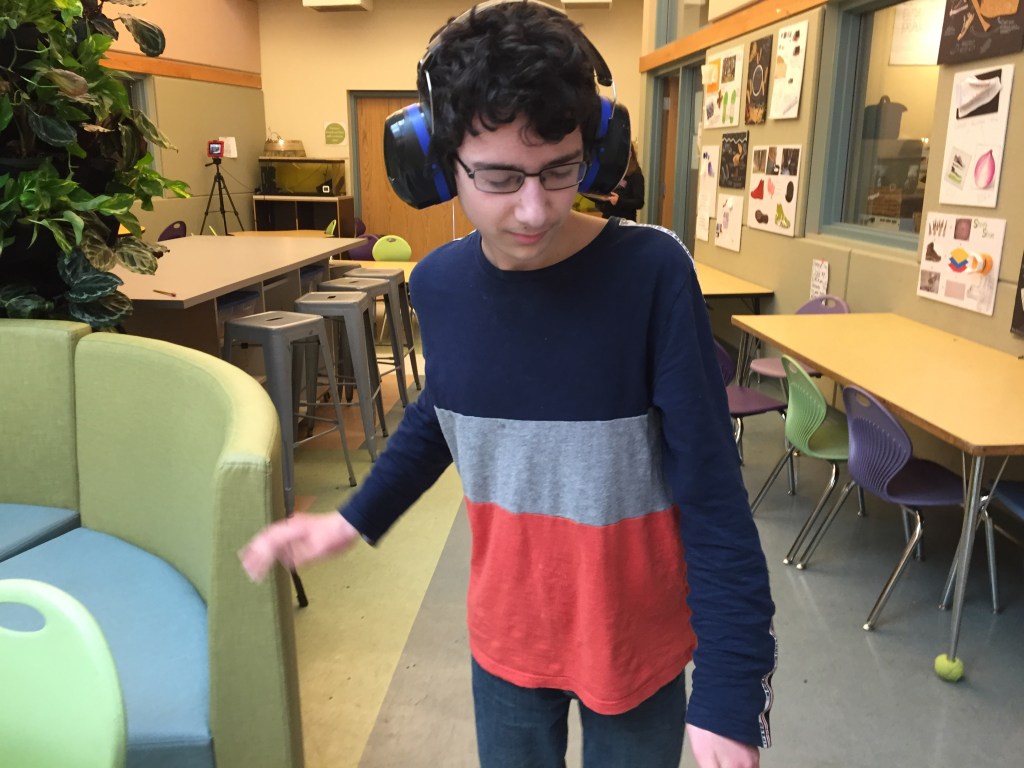
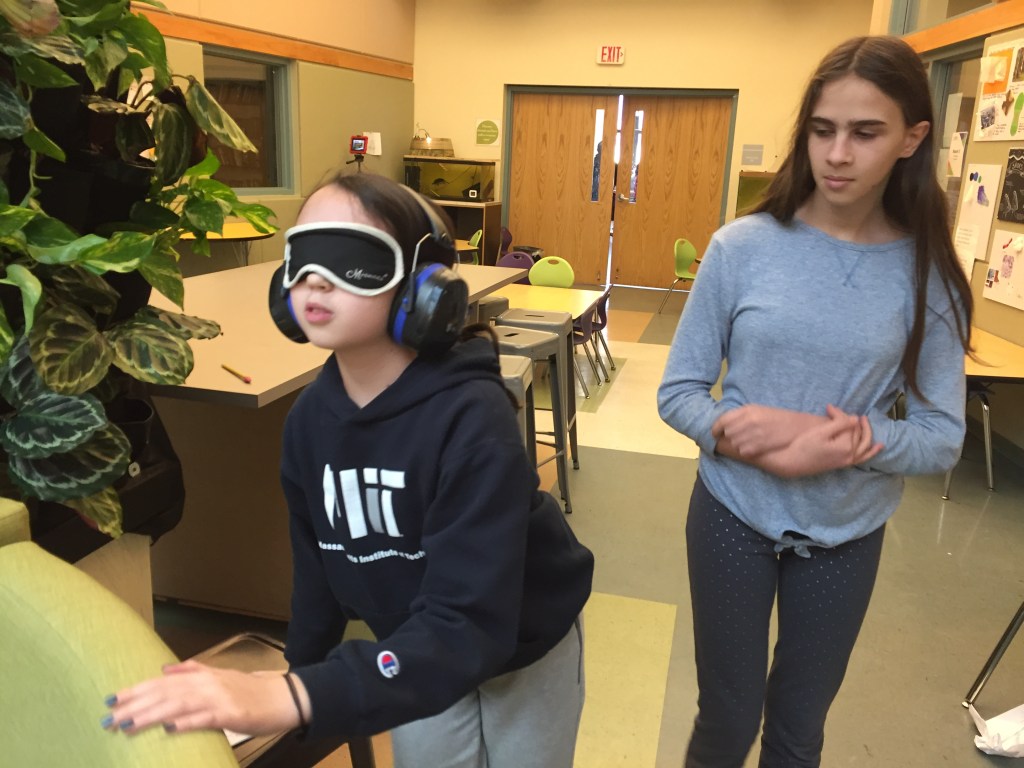
After completing Act I of this play as a class read-aloud, we realized that this is a story that is really best seen. We spent Wednesday afternoon before Health and Wellness and part of today watching a movie version of this play, and then spent the rest of the period rotating through exploration stations to understand what it might mean to experience the world as deaf or blind.
Stations students explored included:
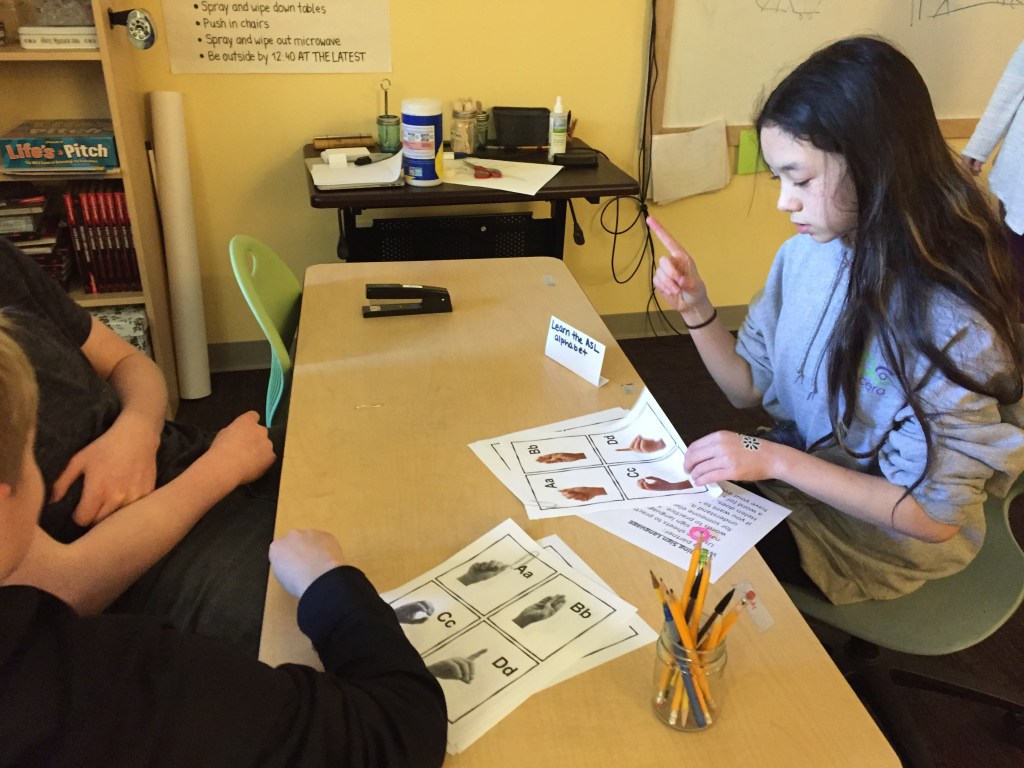
- Practicing the ASL alphabet that Helen learned
- Exploring pictures from Helen’s life and from the early years of The Perkins School from the Blind
- Reading an account of the events that the miracle worker centers on from Helen’s autobiography The Story of My Life
- Watching a video of Helen Keller giving a speech, and explaining how she learned to speak
- Attempting to complete daily tasks, like tying their shoes and navigating a space, without sight
- Reading an article about the debate over cochlear implants
- Learning about Laura Bridgman, another blind and deaf woman who was at Perkins before Helen
We wrapped our exploration my talking about how being deaf or blind, or both, might change the way that we understand the world. Students were particularly interested in why Helen gained fame, while Laura Bridgman, the first blind and deaf woman to learn to communicate, did not. We discussed the different socio-economic background of these women, and how that changed the trajectory of their lives. We also returned to our original question, and talked about whether knowledge was possible for Helen before the acquisition of language.
If students are interested in this topic and want to continue to learn more the Perkins School for the Blind offers guided tours- you can make a reservation here. The museum offers tons of interactive exhibits and students can touch and explore just like the students at Perkins would. I have been many times in the past and have always found it worth the trip!


