

This Wednesday, we launched a new unit on Media & Communication. We began by introducing two essential questions and having students reflect on the answers, first in writing, and then in a group discussion. We recorded initial conjectures and thoughts, which we’ll add to as we go.
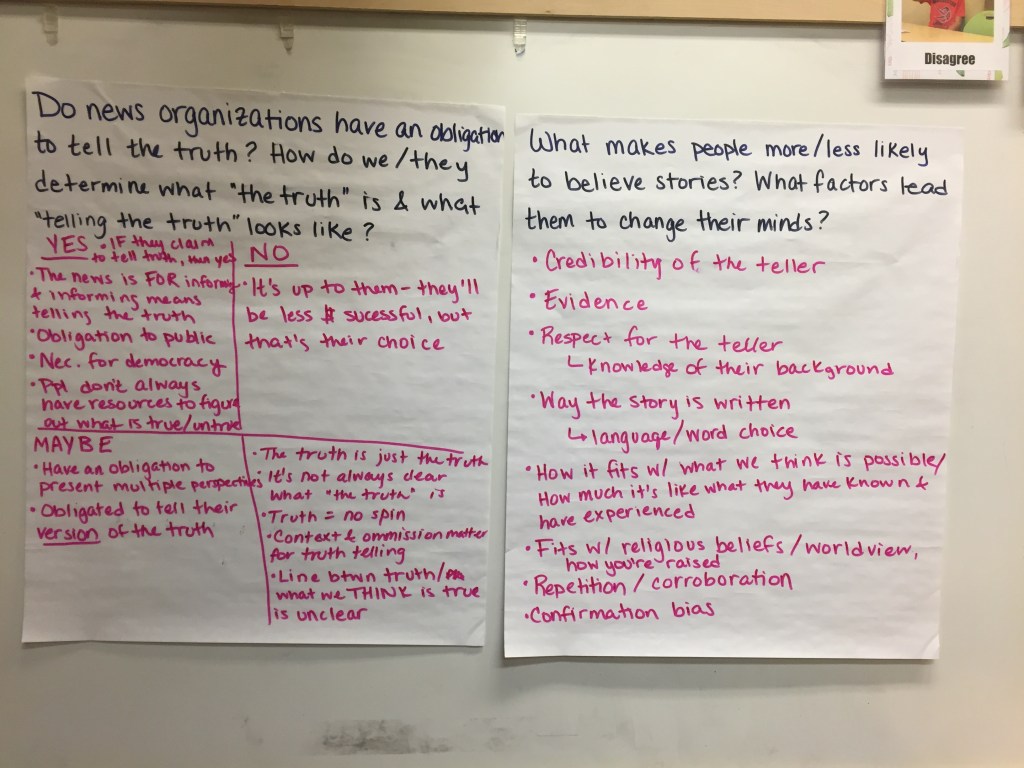
This initial discussion brought out many differing view points. Students both disagreed about whether or not there was an objective “truth” that any of us could access, and whether or not news organizations were obligated to tell the truth. Some of the points that generated the most discussion are below:
- News organizations are obligated to tell the truth because that is what they’ve advertised that they do. They’ve generated an obligation to tell the truth by telling people that what they’re giving them is true.
- News organizations are obligated to tell the truth whether or not they explicitly say that’s what they’re doing because a functioning democracy needs an informed electorate.
- New organizations don’t have an obligation to tell the truth, but the free market should incentivize them to tell the truth, because they’re going to get fewer readers if they don’t tell the truth. So, it’s up to them whether or not they want to be profitable.
- News organizations do have an obligation to tell the truth because their readers don’t have the resources to tell whether or not they’re lying. Their unequal position generates an obligation to tell the truth.
Interestingly, no one seemed to think there was a universal obligation to truth telling! We also spent some time talking about what counted as “telling the truth” and when omission became lying. The kids were excited and every student shared during discussion!
Editorial Writing Project
We’re beginning this unit with a foray into editorial writing. Each year the New York Times runs a student editorial contest (you can see pieces that won in the past here and here). This year, they are running a middle school version of the competition, for students ages 10-14. To give students an authentic, real world audience, we will be submitting our editorials to this contest! As the due date is March 31st, we will be devoting our time between now and then to understanding what makes a good argument, what makes evidence persuasive, and how to tell the difference between facts and opinions.
Below are the timeline for the project and rubric that students were given. Students were told exactly how much work time they would have in class between now and the project deadline, so that they could practice long-term planning.
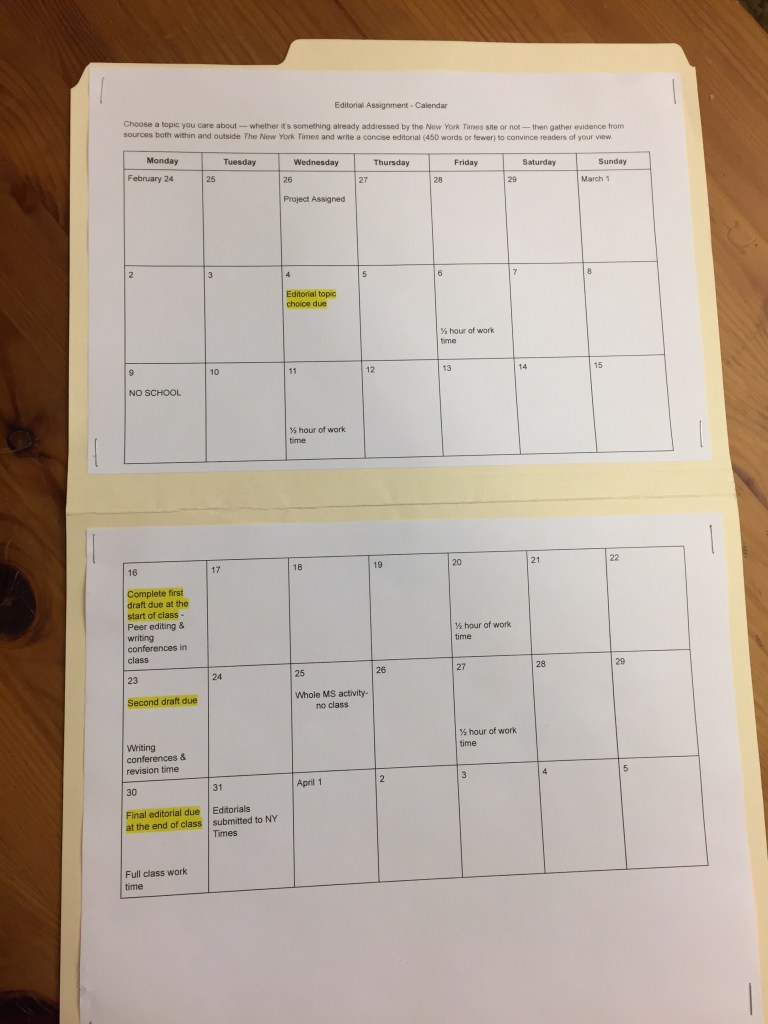
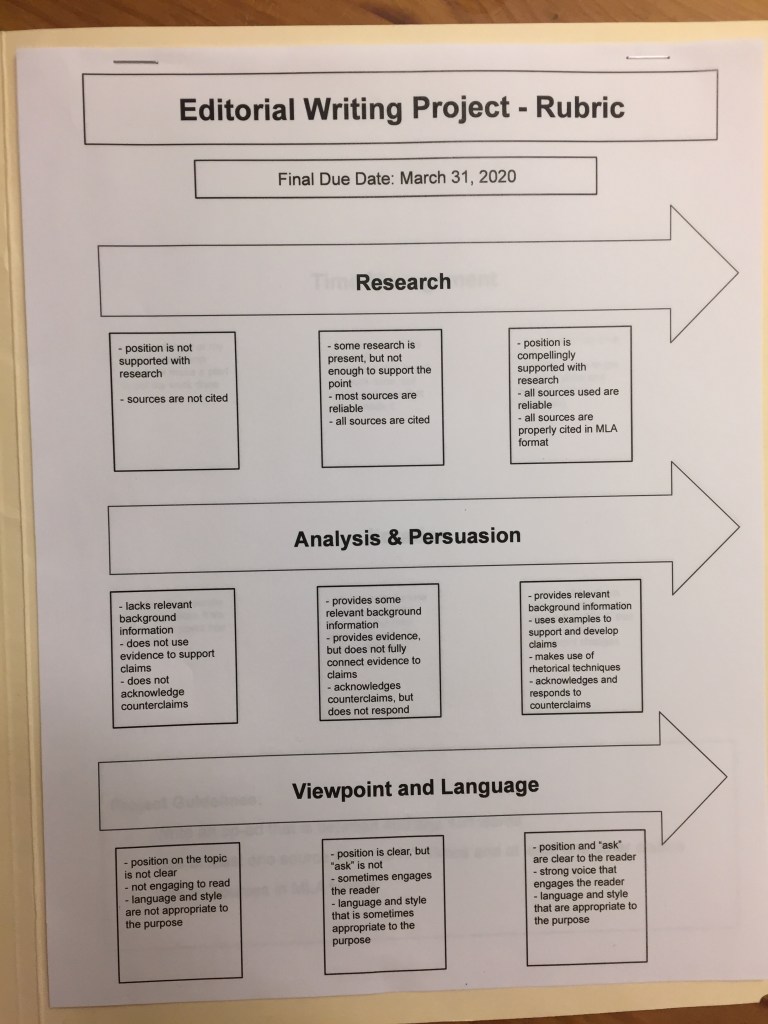
Although topic choices are not due until this Wednesday, many students already know what they want to write about! Proposed topics so far include why schools should start later, the mental health crisis among America’s teens, and the dangers of today’s political rhetoric.
We can’t wait to see what other students decide to write about, and read the final products!


